 English


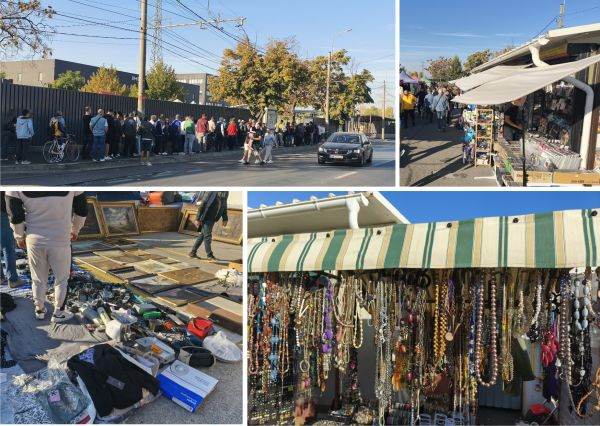

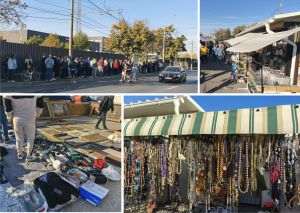
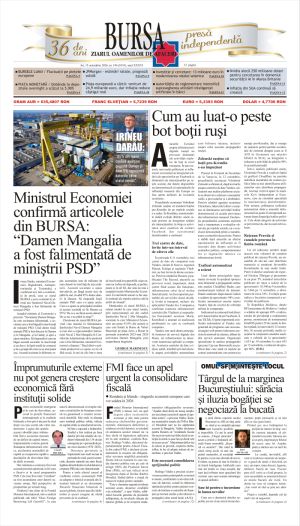
At one of the fringes of the "new" Bucharest lies a market where almost everything imaginable, and unimaginable, is bought and sold. Years ago, it was known as the "Poor People's Market," but it has since acquired a highly respectable official title: the "Bazaar of Memories." From time to time, I go there to take the pulse of the people, specifically, that segment of society most affected by hardship. Of course, I could simply sit in my armchair and ask Artificial Intelligence how life is faring, but I remain beholden to habits from an era that technology is demanding come to a definitive end.
• Six lei for a foray into the world of need
It was a truly magnificent Sunday, so I thought it wouldn't hurt to stretch my legs a bit and hear what the locals were saying. The first shock awaited me at the market gates: dozens of people were queuing to get inside. There is a price for entry, printed right on the ticket: six lei. So, it seems even poverty has an admission fee.
While waiting in line, you inevitably learn what people are hoping to buy: a winter jacket, a bicycle, a cast-iron pot, an axe, some vinyl records, vegetables, paintings, or dish sponges. Everyone seems to have arrived with their own list, where necessities quietly mingle with life's little pleasures. One gentleman has no intention of buying anything: "I came to see what the price of poverty is."
The price varies; it depends on how much you are willing to haggle. In a place like this, the price tag isn't always the final word; an item's value is determined through a classic, age-old ritual where the buyer hopes to pay less, while the seller tries to prove their wares are worth more. Sometimes, the object passes from hand to hand. Other times, it stays on the stall, along with its story.
• Mismatched clothes and the atomic bomb
The selection is astounding. Young people offer up old clothes and mismatched shoes to passersby, while elderly folks, weighed down by memories, sell screws and new tools. The items seem to have arrived here via different paths, yet they all share the same destiny: finding a new owner. Some were once indispensable; others were bought for a need that never arose. Now, they all wait to be looked at with interest-and, perhaps, bargained over.
A man presiding over a chaotic jumble of goods shouts grandly: "I've got it all-come closer! If you like, I'll even sell you an atomic bomb."
He is quickly challenged: "I don't think you have one."
His retort cut the conversation short: "I don't think you have the money to buy it." In a matter of seconds, the global economy was reduced to its commercial essence: supply exists, demand is debatable, and the real issue remains purchasing power. Not even the atomic bomb is exempt from this rule. After all, any commodity finds its place in a market, provided there is someone willing to buy it and someone else convinced they can sell it.
• The market for stories beats the market for goods
The flow of trade is far smaller than the flow of stories. Wealth, business deals, schemes, romances, divorces, food, and scams are all brought up for discussion. Goods can be seen, touched, and turned over in one's hands. Stories, on the other hand, circulate without taking up space or requiring packaging.
Sellers complain that sales aren't what they used to be, while buyers claim their desires outstrip their funds. Everyone has their own arguments and some insight into how the economy works; everyone seems to have found an explanation for the complicated times we are living through. At the market, economic indicators aren't presented in charts, but in sighs, jokes, and calculations made out loud.
If you have the patience to listen, you discover that the market is not merely a collection of objects for sale. It is also a place where people compare their troubles, test their theories about life against one another, and try to figure out whether these hard times are theirs alone or a shared experience. Sometimes, a pair of shoes draws less attention than the story of the person selling them. At other times, an object of no apparent value becomes the pretext for a conversation that lingers long after the bargaining has ended.
• Politicians share the same fate, regardless of party
Politicians are reviled democratically and equally, enjoying the same amount of airtime. In this marketplace, political differences seem to fade in the face of everyday grievances. When people talk about money, prices, and shortages, patience for official explanations wears thin. Promises are judged by the state of one's wallet, and public speeches are evaluated against a simple criterion: is there any visible change in daily life?
I haven't conducted a survey, nor do I claim that the people I met here represent society as a whole. Yet, the market offers a direct glimpse into one segment of it-the segment for whom shopping involves calculations, and bargaining are not just a game. When the gap between the asking price and the available funds becomes too wide, even the most modest desires must be re-evaluated.
Here, political discontent finds simple expression. Sometimes with humor. At other times, with a frankness that official language avoids; yet, regardless of political leanings, there seems to be common ground: people want a better life and have little patience for those who explain why that has to wait.
• Poverty doesn't vanish just because you change its name
It is heartening that, while heated arguments break out, things rarely escalate beyond that point. People disagree, trade barbs, haggle, and then go about their day. Amidst the market's din, life takes its course-complete with minor conflicts and the humor that occasionally softens a situation.
"Memory Bazaar" sounds more elegant than "Poor Man's Market." This new label has the advantage of transforming old objects into vessels of nostalgia, casting a touch of poetry over items someone has parted with. Yet, beyond the name, what remains are the clothes, the tools, the motley assortment of goods, and the people trying to make something out of them.
Perhaps that is precisely the point of such a walk. There are statistics, analyses, and explanations regarding the economy, consumption, or standards of living-but without taking the pulse of life on the ground, the idea that you might truly understand the world you live in remains an illusion. I left the market without an atomic bomb and without buying a thing, yet with enough stories to understand that, sometimes, the most interesting item for sale isn't found on the stall. And poverty-no matter how honorably we might name the place where it gathers-continues to haggle over its price every day.














 Euro
Euro Dolar SUA
 Franc elveţian
 Liră sterlină
 Gram de aur































Reader's Opinion